Best WordPress Security Practices for Multiple Client Sites (2026)

Editorial Team
If you run a WordPress development or maintenance agency, you already know the operational reality of securing WordPress sites: every client site you manage is a potential liability.
This isn’t just about defending a single site but securing multiple sites at once. With the volume of core updates and theme patches, and the best WordPress security plugins to configure, manual security is hardly maintainable and needs a better alternative.
This is why knowledge of the best WordPress security practices for multiple client sites is critical to moving from reactive, manual fixes to a scalable system. It is the most crucial decision an agency can make. You need a defining process that turns repetitive, time-consuming security tasks into automated and efficient services.
In this guide, I will break down the best WordPress security practices for multiple client sites into a clear, agency-grade operational framework. I will show you how to protect every client site with proven, scalable practices that save your time.
Best WordPress Security Practices for Multiple Client Sites (TOC):
Are Your Clients’ WordPress Sites Truly Secure? (The Hidden Risks Agencies Overlook)
The biggest myth in the agency world is that security is a one-time task. You install one of the best WordPress security plugins, check a few boxes, and move on.
But in reality, the majority of WordPress security problems don’t start with complex zero-day exploits; they begin with the minor, easily-overlooked oversights that scale poorly across dozens of client sites.
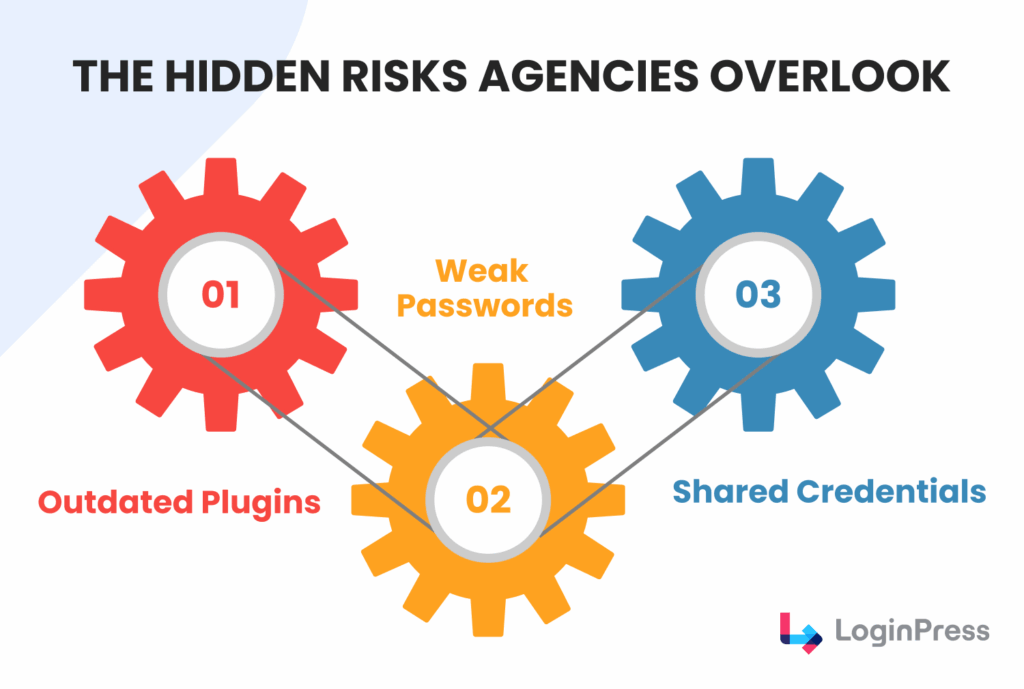
These minor overlooked factors become harmful shortcomings. You might have 99% of your sites perfectly secured. Still, a client with an old, unpatched contact form plugin or a team member using a weak, reused password can be the single point of failure that compromises your entire reputation.
Let’s go through some of the ignored risks and vulnerabilities that agencies overlook:
1. Outdated Software
This is the most common cause of WordPress security vulnerabilities. Developers constantly find and patch WordPress security issues. Still, if a site is running an old version of a theme, a premium plugin, or even the WordPress core, the vulnerability is already exploitable.
What is Overlooked: Agencies often prioritize major site launches, pushing off maintenance tasks. A client’s site running an outdated slider or SEO plugin can contain a critical remote code execution (RCE) flaw, allowing an attacker to gain complete control of the server without ever logging in.
What Agencies can Do: Standardize WordPress maintenance and security with centralized management tools that will enforce real-time, safe updates across the entire client portfolio.
2. Weak and Shared Credentials
Bots continuously hammer the default login page (/wp-admin) with lists of common passwords and usernames, a technique known as a brute-force attack. The study shows that 7.36% of all detected attacks are brute-force attempts.
If a client or a junior staff member uses “admin” as a username or “ClientName2024!” as a password, access is inevitable.
What Agencies Ignore: Relying on clients to choose strong passwords or, worse, sharing a single FTP or admin password across your internal team and client sites. This introduces a human element risk.
What Agencies can Do: Enforce a strict password policy: use of a unique 16+ character password on every account (SFTP, database, and WP admin) and mandatory Two-Factor Authentication (2FA) for all users with publishing or administrative privileges.
3. Cross-Contamination and Trust Damage
The most severe disadvantage for an agency isn’t the cleanup cost, but the damage to the client’s trust.
For example, an attacker exploits a known WordPress security vulnerability in an old version of a page builder plugin on a client’s site. The hacker installs a malicious backdoor script.
- Client A: Gets blacklisted by Google; their site is defaced or redirects users to spam sites.
- Client B and C: Hear about Client A’s breach. They immediately question your competence and the security of their own sites.
- Your Agency: Faces hours of emergency cleanup, a costly de-indexing process, and the potential loss of multiple recurring maintenance contracts.
This is why you need to treat every site as a critical asset. A strong security strategy must focus not just on installing the best WordPress security plugins, but on eliminating the common flaws that turn a minor breach into an agency crisis.
What Happens When One Client Site Gets Hacked? (The Domino Effect Agencies Ignore)
A single WordPress security problem can trigger a devastating domino effect that threatens your operations, profits, and reputation. Here are some of the best WordPress security practices for client sites:
1. Emergency Crisis and Opportunity Cost
- Non-profit work: Your senior developers are instantly pulled away from paid work to perform emergency cleanup, backend scanning, and client management.
- Revenue Drain: Hours spent fixing the hack are hours not spent earning revenue. This is the hidden financial loss of WordPress maintenance and security.
2. Reputation and Network Damage
- Blacklisting: Google flags the infected site, halting traffic and affecting the client’s business.
- Contagion Risk: The WordPress security vulnerability can damage your IP reputation on shared hosting, causing emails from all your clients to be flagged as spam.
3. The Blame Game
- Client Tension: Agencies are typically blamed, regardless of whether the client caused the breach (e.g., a weak password or a bad plugin).
The Solution: Your contracts must clearly define your best WordPress security practices for multiple client sites and mandate the use of best WordPress security plugins to set professional boundaries and protect your agency from liability. Ignoring scalable security can risk your entire client portfolio.
Why is Managing WordPress Security for Multiple Sites so Challenging?
Managing a handful of sites to maintaining a portfolio of dozens introduces challenges that traditional, site-by-site security methods simply cannot handle. The complexity quickly scales beyond what any small team can manage manually. This is why some of the best WordPress security practices are for multiple client sites to improve agency efficiency and help them focus on what matters.
When managing multiple client sites, you are constantly battling three operational pain points:
- Fragmented Access Management: Each site has different admin usernames, login URLs, and client-side roles. Tracking all these credentials and ensuring everyone is using 2FA without a centralized system is impossible. This also directly leads to preventable WordPress security vulnerabilities.
- The New Updates Flow: A typical site has 10–20 plugins, plus a theme and the core installation. If you manage 50 sites, you are potentially tracking over 1,000 components. Checking each site individually for updates, running backups, and then pushing the update is a day-long manual task.
- Security Drift: If one client insists on a specific, unmaintained plugin. Another client might grant a freelancer temporary admin access without telling you. Over time, the baseline security level across your sites vanishes. You lose the consistency needed to guarantee a reliable defense, no matter how strong your best WordPress security plugins appear to be.
The Solution: Centralized Command and Control
To implement the best WordPress security practices for multiple client sites, you must shift your perspective from individual site management to portfolio management. The only valid solution for agencies is to adopt a Centralized Management Tool (CMT).
These platforms provide a single, secure dashboard to manage all your clients simultaneously. CMTs also automate repetitive, error-prone tasks such as updates, backups, and security scans, allowing your agency to enforce a consistent WordPress maintenance and security standard across the board.
This strategic move transforms your security operation from a resource drain into a strong, standardized, and profitable service offering.
What are the Best WordPress Security Practices for Multiple Client Sites?
Moving past the unplanned crisis mode requires automating your security protocols into a repeatable checklist. These are the best WordPress security practices for multiple client sites; you must apply them across every single domain to achieve efficiency and client defense.
1. Keep WordPress Core, Plugins, and Themes Updated
This is the most critical and often overlooked step. Approximately 90% of WordPress security vulnerabilities are traced back to outdated software. Your central management tool (CMT) should be configured to run automated updates, but your internal protocol must validate:
- All major version updates must be deployed to a staging environment for testing before deployment.
- Delete all unused themes and plugins, even if deactivated, as they can create security vulnerabilities. Only use plugins from trusted sources and developers with clear update histories.
2. Enforce Strong Password Policies and Two-Factor Authentication (2FA)
The password is the weakest link. In June 2025, it was reported that a data leak contained 16 billion stolen passwords and user credentials. For agencies, ensuring consistency across password-related processes is key.
- Enforce Strong Passwords: Use one of the best WordPress security plugins to require all users, including agency staff and clients, to use complex, at least 16-character passwords and to change them periodically.
- Enable Two-Factor Authentication (2FA): 2FA must be mandatory for all Administrator and Editor roles. This requires something the user knows (the password) and something the user has (a code from a phone app), making brute-force attacks virtually useless.
3. Limit Login Attempts and Change Default Admin URLs
You need to shut down automated brute-force attacks at the door. To prevent these, enable these best WordPress security practices for multiple client sites:
- Limit Login Attempts: Configure your security plugin to lock out an IP address after 2-3 failed login attempts. You can use LoginPress’s built-in Limit Login Attempts add-on, which protects your login form from constant brute force attacks.
- Change Default URLs: Replace the predictable login page slug (/wp-login.php or /wp-admin) with a unique, custom URL (e.g., /client-portal-login). This instantly stops 99% of login attempts by dumb bots. With LoginPress’s Hide Login add-on, instantly hide your login page from irrelevant traffic and bots trying to hammer the default WordPress URL.
4. Use SSL and HTTPS Across the Board
An SSL certificate encrypts the data moving between the user’s browser and the server. This is no longer optional; it’s a crucial aspect of trust and SEO.
- Enforce HTTPS: Ensure all client sites are running on HTTPS. Use a plugin or server-level configuration to redirect all HTTP traffic to HTTPS, ensuring encrypted communication.
5. Restrict Admin Privileges
One of the best WordPress security practices for multiple client sites is to grant access only to what is strictly necessary. This role-based access limits users’ ability to install vulnerable plugins or interfere with critical settings. This prevents accidental WordPress security problems.
Here is how it can be implemented:
- Limit Administrators: Only the core agency team and, at most, one client contact should have the Administrator role.
- Use Proper Roles: Clients who only need to write and publish content should be given the Editor or Author role.
6. Disable XML-RPC and Directory Browsing
These features are either entry points or provide hackers with unnecessary information. To prevent these vulnerabilities from becoming exploitable, enable:
- Disable XML-RPC: This feature is primarily used for mobile publishing, but it is also a major factor in brute-force attacks. If not explicitly needed, use your security plugin to disable it entirely.
- Disable Directory Browsing: Configure your server (via .htaccess) to prevent visitors from viewing directory contents (e.g., /wp-content/plugins/). This stops hackers from scanning for vulnerable files.
7. Regularly Back Up Sites
Backups are not only a security feature but also a guarantee of recovery. Your WordPress maintenance and security plan is incomplete without these best WordPress security practices for multiple client sites.
- Automate Off-Site Backups: Implement daily or real-time backups using your CMT or a dedicated solution.
- Remote Storage: Store all backups on a secure, off-site cloud service (Amazon S3, Google Drive, etc.), separate from the hosting account. If the server is compromised, the backup must remain protected and unchanged.
8. Monitor Activity Logs and File Integrity
Proactive monitoring is how you detect breaches in their earliest stages. Here are some monitoring checks you can add to your site for maintenance:
- Activity Logging: Use a security plugin to monitor and log all critical user actions (successful/failed logins, core file modifications, plugin installations, user role changes).
- File Integrity Checks: Schedule regular scans that compare your live site’s files against the official WordPress repository versions.
- Automate Alerts: Add instant alerts on unexpected file changes, which are often the first sign of a hidden backdoor installed by a successful exploit.
By implementing the best WordPress security practices for multiple client sites into your agency’s routine checks, you shift your operational focus.
Security stops being a chaotic burden and becomes a disciplined workflow that increases client satisfaction and protects your agency’s most valuable asset: its reputation, using the best WordPress security practices for multiple client sites.
What are the Best WordPress Security Plugins that Agencies Should Rely On? (Save Time with the Right Tools)
For agencies managing a portfolio of client websites, security cannot be an afterthought. Relying on a fully managed toolkit of robust security plugins is essential to maintain client trust, ensure compliance, and maximize efficiency by following best WordPress security practices across multiple client sites.
The following plugins set a high standard for WordPress security, offering features and scalability tailored to agency use.
1. LoginPress: Login Hardening and Brand Trust
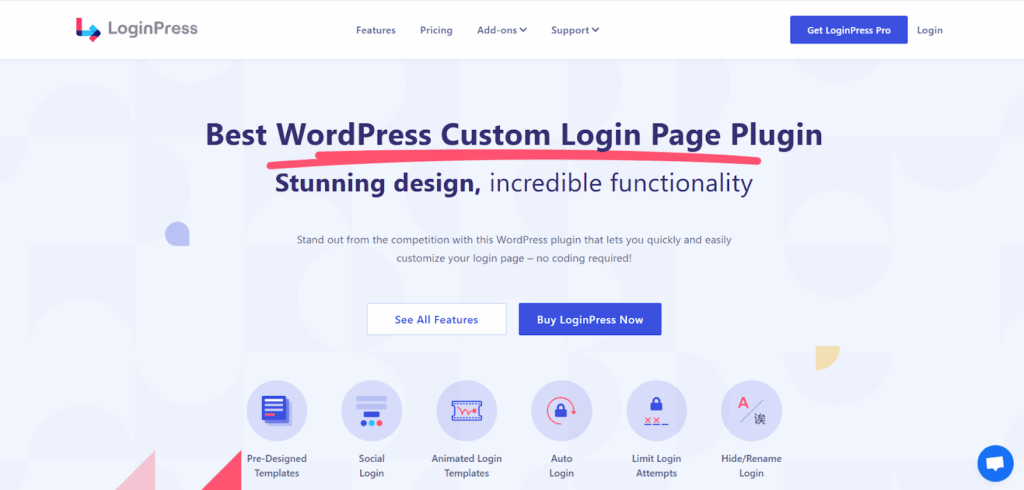
LoginPress specializes in securing the most vulnerable point of any WordPress site: the login page. While often overlooked, customizing and protecting this gateway is one of the best WordPress security practices for multiple client sites, helping prevent automated attacks and establishing immediate user confidence.
- Core Agency Benefit: Brand Consistency and First-Tier Defense. Agencies can easily and instantly apply a custom, branded login experience across all client sites, instantly boosting professionalism. Built-in features such as Limit Login Attempts and reCAPTCHA provide a lightweight, client-facing defense against brute-force attacks without the overhead of a full WAF.
- Multi-Site Suitability: Excellent for ensuring a consistent, professional brand experience across all sub-sites in a network. It focuses on the login layer, adheres to best WordPress security practices for multiple client sites, and is a high-value addition to every build.
2. Wordfence Security
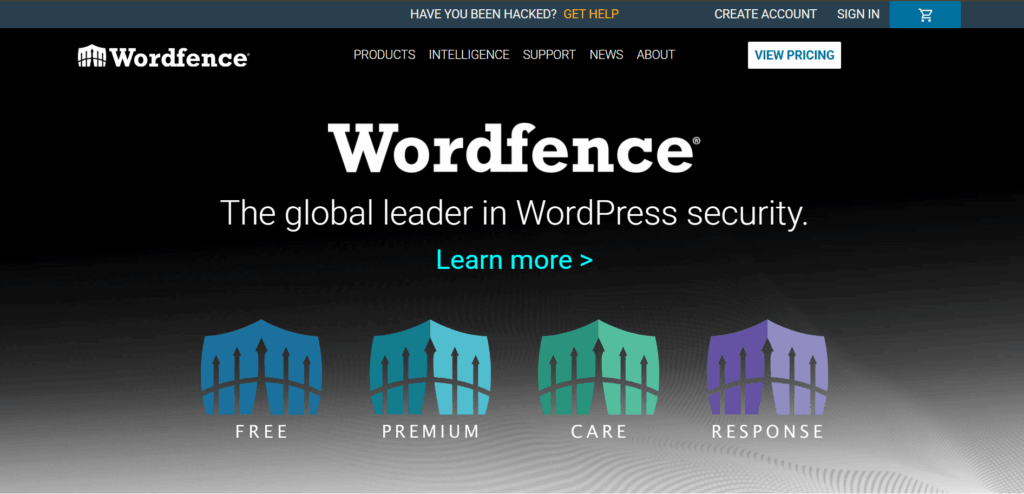
Wordfence is one of the most widely adopted security plugins, known for its powerful Endpoint Firewall and deep integration with its Malware Scanner. It executes its security checks directly on the server, offering high-precision defense and helping you implement the best WordPress security practices for multiple client sites.
- Core Agency Benefit: The premium version of real-time threat intelligence provides firewall rules and malware signature updates. This means any closing vulnerability gaps that free versions leave open for 30 days. This immediate protection is crucial for protecting client revenue and reputation.
- Multi-Site Suitability: Wordfence offers Wordfence Central, a free centralized dashboard designed specifically for agencies. This tool allows you to monitor the security status, configure settings, and manage licenses for hundreds or thousands of sites from a single interface helping you implement best WordPress security practices for multiple client sites.
3. Sucuri Security
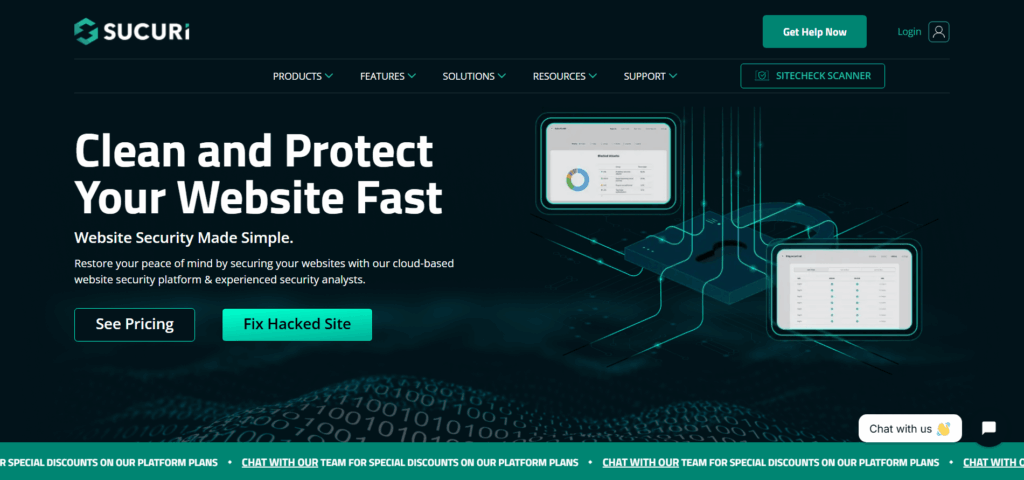
Sucuri operates as a cloud-based security platform, meaning its core defenses sit outside your server. This approach blocks malicious traffic before it ever reaches the client’s site.
- Core Agency Benefit: Performance and Emergency Response. The cloud WAF offloads security processing from the client’s host, improving site speed. Crucially, Sucuri’s paid plans include guaranteed malware removal and cleanup by their security team, providing a stress-free emergency plan for hacked client sites.
- Multi-Site Suitability: Ideal for managing diverse hosting environments, as the cloud WAF protects any site regardless of its host. The centralized management portal streamlines handling security and malware incidents across a large portfolio, enabling easy implementation of best WordPress security practices for multiple client sites.
4. Solid Security
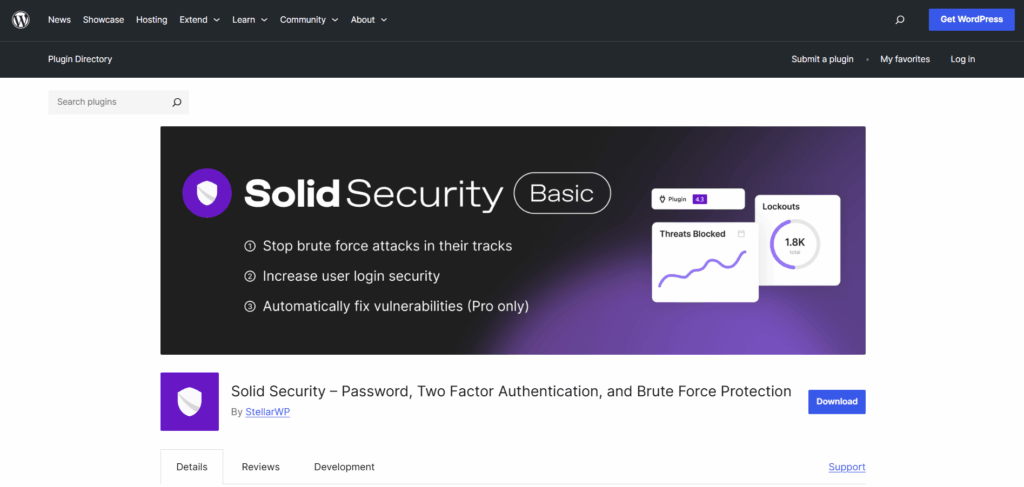
Solid Security focuses on an approach to best wordpress security practices for multiple client sites for securing every facet of a WordPress installation, from login and user settings to file permissions and core settings.
- Core Agency Benefit: It excels at enforcing best practices like Two-Factor Authentication (2FA), strong password requirements, and regular database backups. Its setup wizard quickly guides new users (and new client sites) through security essentials.
- Multi-Site Suitability: The Pro version offers features that are easily managed across multiple client sites, including security grade monitoring and the ability to schedule and automate many security tasks, minimizing manual agency effort.
5. All-In-One WP Security and Firewall (AIOS)
AIOS offers flexible features in the free version, covering best WordPress security practices for multiple client sites, file protection, database security, and firewall functionality through a user-friendly security-grading system.
- Core Agency Benefit: For smaller client sites or those on tight budgets, the free version offers strong features that outperform many competitors’ basic offerings. Its security point system provides an easy-to-digest metric for client reporting.
- Multi-Site Suitability: AIOS is fully compatible with WordPress Multisite, allowing Super Admins to manage and enforce security policies across the network. The premium version unlocks dedicated features, such as automatic malware scanning, making it a viable, cost-effective option for scaled protection.
Free vs. Premium for Agency Scalability
When implementing best WordPress security practices for multiple client sites and selecting tools for multi-site management, the choice between free and premium versions is often a decision about risk management and operational efficiency:
| Feature | Free Version (Trade-off) | Free Version (Trade-off) |
| Threat Intelligence | 30-day delay in firewall rules and malware signatures | Real-Time Updates |
| Malware Remediation | Manual cleanup required | One-Click or Guaranteed Cleanup |
| Scalable Management | Site-by-site configuration required | Centralized Dashboards |
| Support | Community forums only | Priority, Dedicated Support |
While free versions are excellent for initial setup and basic hardening, relying on them introduces unnecessary risk. Premium licenses are a justifiable business expense that protects client investments, minimizes emergency work, and frees up agency time for high-value development.
Bonus: How Can You Show Clients Their Sites Are Secure? (Reports That Build Trust)
In the agency-client relationship, security is not just about strong technical implementation; it is equally about transparency and value. Clients trust what they can see. Providing regular, clear evidence of your security and maintenance efforts is essential to justify and secure long-term contracts and successfully sell high-value maintenance plans.
The Power of White-Labeled Reporting
Agencies must shift from simply doing security work to clearly reporting on it in accordance with best WordPress security practices across multiple client sites. The most effective method is through white-labeled security reports and activity logs. These reports present complex technical data in a clean, client-friendly format that carries your agency’s branding, reinforcing best WordPress security practices for multiple client sites.
Key Report Components That Build Confidence:
- Security Status Score: A simple, high-level score (e.g., A+ to F) provides an instant snapshot of the site’s health.
- Activity Log Summary: Detail all maintenance and security tasks completed during the reporting period, including:
- Successful plugin/theme/core updates.
- Malware scans executed (with clean results).
- Firewall activity (number of blocked malicious login attempts or attacks).
- Successful scheduled backups.
- Performance Metrics: Include metrics like site uptime and page speed improvements, reinforcing that security does not slow the site down.
Tools for Automated and Professional Reporting
Relying on specialized WordPress management platforms is the most efficient way for agencies to generate these consistent reports without manual overhead in best WordPress security practices for multiple client sites.
| Tool | Primary Benefit for Agencies | Report Customization and Branding |
| ManageWP | Comprehensive Automation | High-level white-labeling and detailed customization |
| MailWP | Self-Hosted and Privacy-Focused | Strong white-labeling capabilities to entirely remove plugin branding and feature your agency’s logo |
| Custom Dashboards | Deep Integration and Customization | Total control over presentation; reports are embedded directly where the client logs in |
When clients receive a professional report detailing the successful blocking of 500 brute-force attacks or the daily monitoring provided by their WAF, the value of the monthly retainer becomes undeniable.
- Justification: The reports move the security spend from a hidden cost to a proactive service that directly protects their business interests.
- Upselling: Use the data to highlight areas of potential risk (e.g., “We recommend upgrading to the Premium WAF to eliminate the 30-day delay on threat intelligence, as noted in this month’s status report.”)
These data-driven best WordPress security practices for multiple client sites make security upgrades a logical, necessary step rather than an optional expense. By making security visible, agencies build client trust and make security an unavoidable part of their service offering.
What Should You Do If a Client Site Gets Hacked? (A 5-Step Recovery Plan)
When a client site is compromised, immediate, methodical action is paramount.
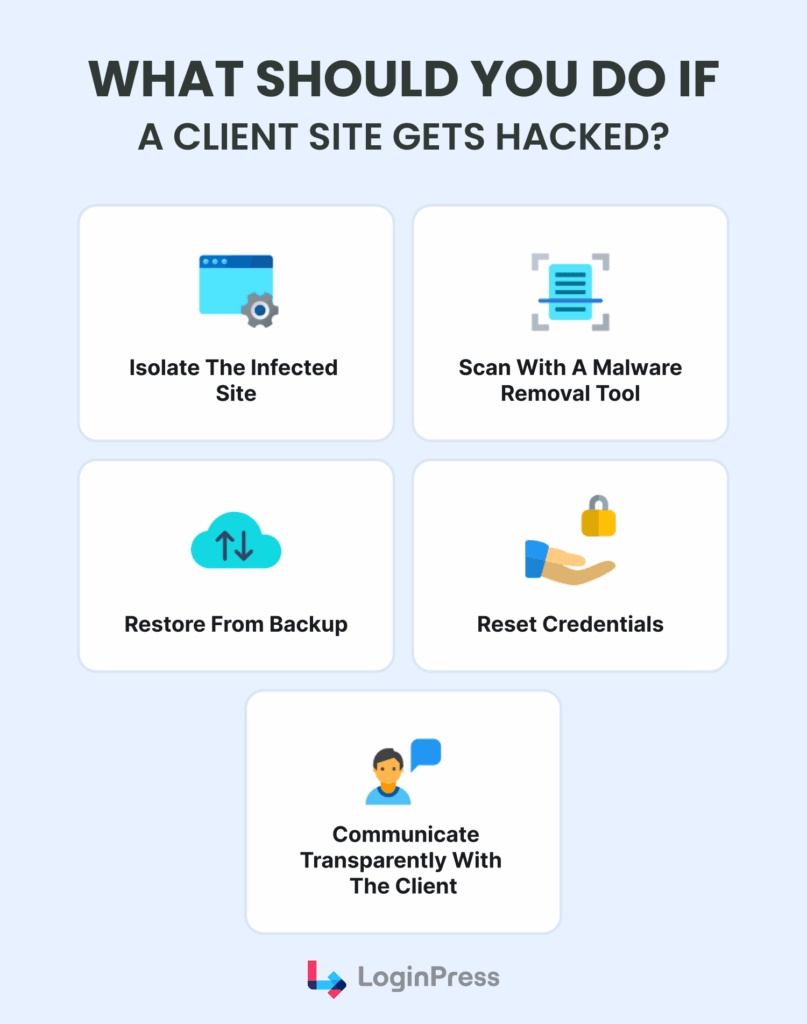
Follow these best WordPress security practices for multiple client sites to contain the damage, restore service, and safeguard client trust.
Step 1: Isolate the Infected Site
The absolute first step is containment to prevent the spread of malware and further damage.
- Take the Site Offline: Temporarily rename the root .htaccess file, or use a plugin/hosting feature to display a simple static Maintenance page.
- Change File Permissions: Restrict file permissions to prevent attackers from creating new files.
- Block Access: If the attack vector is known (e.g., a specific IP address), block it using the WAF or hosting firewall.
Step 2: Deep Scan for Malware
According to the best WordPress security practices for multiple client sites, once the system is isolated, identify and eliminate any infections.
- Run a Full Security Scan: Use a premium security tool to identify all compromised files, backdoors, and database injections.
- Clean Core Files: Compare all core WordPress, theme, and plugin files against clean versions. Immediately delete or replace any files that have been modified or newly added by the attacker.
- Review Database: Manually inspect or use the scanner to clean up malicious code injected into the database, especially within user tables or option fields.
Step 3: Restore from Backup
The fastest and most reliable way to ensure a complete cleanup is to revert to a pre-attack state.
- Identify the Last Clean Backup: Determine the exact date/time before the infection occurred.
- Full Restoration: Restore the entire file system and database from that verified clean backup. If the infection vector (e.g., a vulnerable plugin) is known, update or remove it before restoring the content.
Step 4. Reset Credentials
Assume that all current login details, API keys, and server credentials have been compromised.
- Change All User Passwords: Force a password reset for all administrators, editors, and other high-level users.
- Update Hosting Credentials: Change the cPanel, SSH, and FTP/SFTP passwords immediately.
- Generate New Security Keys: Regenerate the keys in the wp-config.php file to invalidate existing cookies and sessions.
Step 5. Transparent Client Communication
Maintain client trust by proactively managing expectations and providing clarity to avoid misunderstandings.
- Immediate Notification: Inform the client that the site was breached but has been isolated and is under control.
- Status Updates: Provide brief updates during the recovery process, avoiding overly technical jargon.
- Post-Mortem Report: After recovery, deliver a concise report detailing the vulnerability (if known), the steps taken, and the assurance that the site is now secure.
Prevention: Hardening for Future Incidents
To mitigate the risk of repeat incidents, immediately implement a proactive hardening strategy, such as best WordPress security practices for multiple client sites:
- Enforce Two-Factor Authentication (2FA) for all administrator accounts.
- Maintain Automatic Updates for all core, theme, and plugin files.
- Implement a strong WAF to block known exploits.
- Audit Users to remove unnecessary or inactive accounts.
What Tools Can Automate WordPress Security for Agencies?
Scaling security across numerous client sites requires automation. For agencies, relying on manual processes is inefficient and introduces a significant risk of human error. Dedicated WordPress management platforms make it easy to enforce security protocols, ensuring continuous protection and fast response times. These tools help with the best WordPress security practices for multiple client sites
Here are the essential tools that allow agencies to manage best WordPress security practices for multiple client sites at scale:
| Tool | Primary Automation Focus | Key Agency Benefit |
| ManageWP | All-in-One Dashboard. Automates backups, updates, uptime monitoring, and security scans from a single interface. | Efficiency and Reporting. Provides a centralized, commercial solution ideal for agencies that need professional client reporting built in. |
| MainWP | Self-Hosted Management. Automates core tasks, including security checks, plugin/theme updates, and performance monitoring. | Control and Privacy. Gives the agency complete control by keeping all client data on its own secure, self-hosted platform. |
| InfiniteWP | Multi-Site Management. Focuses on efficient, one-click execution of updates, backups, and staging across an unlimited number of sites. | Bulk Execution. Streamlines high-volume tasks, allowing staff to perform critical security maintenance across all clients quickly. |
| BlogVault | Real-Time Backups and Staging. Recognized explicitly for its incredibly reliable, off-site, incremental backups and one-click staging environment | Reliable Recovery. Ensures a verified, clean backup is available at all times, enabling fast, guaranteed recovery from a security incident. |
Why Automation is Essential for Security
Automating routine maintenance is not only about saving time. It is one of the best WordPress security practices for multiple client sites that directly improves your risk profile:
- Eliminates Human Error: Repetitive manual tasks (such as checking for updates or verifying backup completion) are prone to human error. Automation ensures these tasks are executed precisely, every single time.
- Guarantees Response Time: Automated tools provide instant alerts for critical security events, such as malware detection or site downtime. This immediate notification shortens the window between an attack and your agency’s response.
- Ensures Consistency: You can standardize security practices (e.g., weekly full backups, daily security scans) across all clients, providing a consistent, high level of WordPress maintenance and security regardless of which team member manages the site.
- Enables Scaling: By removing the need for staff to log in to dozens of individual client sites manually, automation frees your team to focus on high-value work such as development and strategic consulting, directly facilitating agency growth.
By integrating these platforms, agencies move from reactive responses to a more proactive security management using best WordPress security practices for multiple client sites.
How can Agencies turn WordPress Security into a Retainer Opportunity?
WordPress Security issues don’t have to be a hidden cost for clients; for your agency, it’s a great way to earn reliable, recurring income. The key is to stop talking about “fixing problems” and start talking about guaranteeing continuous, stable service. You are selling protection, not features, according to best WordPress security practices for multiple client sites.
1. Selling Reliability Keeps Clients
Clients trust what works and is understandable. Nothing loses trust faster than a site crash or a hack. You need to emphasize that ongoing WordPress security issues are like the necessary insurance that keeps their business running smoothly using best WordPress security practices for multiple client sites.
- Focus on Uptime: Tell clients you guarantee their site stays online and open for business every day, protecting their money.
- Show What You Stop: Use easy-to-read reports to show them the hundreds of threats you successfully blocked that month. This proves your service is worth the money, moving it from an invisible cost to a valuable defense.
2. Offer Different Service Packages
To sell security successfully, offer clear service packages (tiers) according to best WordPress security practices for multiple client sites. Each level should provide more protection than the last, with your top package including the best security features for a higher price.
3. The Smart Business Move: The Retainer
The smartest move is to combine security and maintenance into one monthly fee, which can be called a Digital Reliability Retainer, as mentioned in the best WordPress security practices for multiple client sites.
- Steady Income: Monthly retainer fees give your agency stable, predictable income, which is crucial for growth.
- Asset Protection: By managing the technical side, you become the primary guardian of the client’s website, which is their most important digital asset. This makes your agency impossible to replace.
- Simple Sale: Instead of selling complex tools or one-time fixes, you simply sell the result: guaranteed uptime, expert protection, and the assurance the client needs to focus only on running their business.
By selling security as a mandatory operational service, you turn technical tasks into a reliable source of income and build strong relationships by using best WordPress security practices for multiple client sites.
FAQs on Best WordPress Security Practices for Multiple Client Sites
How do I ensure my clients use strong passwords and 2FA without constant policing?
To eliminate the human factor risk, you must enforce security policy through technology, not just requests. Relying on clients to adhere to policy is a major WordPress security problem.
Enforce 2FA: Use a dedicated plugin that prevents users with high-level roles (Administrator, Editor) from accessing the dashboard until they have successfully configured 2FA. Make this a non-negotiable step during client onboarding.
Set Password Lengths: Configure the security plugin to enforce a minimum password length and a password complexity requirement.
Educate and Report: Provide white-labeled reports (via your Centralized Management Tool) showing the security score and 2FA status of their site. This demonstrates value while shifting the responsibility for non-compliance back to the client, preventing future disputes over WordPress security vulnerabilities.
Is it better to use a free security plugin on all sites, or invest in a premium, centralized solution?
For an agency focused on scalable and profitable WordPress maintenance and security, a premium, centralized solution is a critical investment, not an expense. Invest in a premium, agency-tier service that offers a single dashboard for managing security across all clients. This allows for bulk updates, centralized alert monitoring, and, crucially, off-site scanning. This ensures consistency and saves thousands of emergency hours annually.
How often should I update core, themes, and plugins for multiple client sites?
To minimize exposure to known WordPress security vulnerabilities, your agency’s protocol should prioritize daily checks for updates, with automated deployments based on risk level.
Core and Critical Plugins: Deploy security patches and minor core updates (e.g., 6.4.1 to 6.4.2) automatically or immediately after a quick check.
Major Updates: Major core or plugin version changes should be scheduled weekly or bi-weekly and must be deployed to a staging environment first. The goal of effective WordPress maintenance and security is to balance speed with stability. Your Centralized Management Tool should flag available updates daily, allowing your team to action them within 24-48 hours.
What’s Next?
You now have a clear plan to manage security using one of the best WordPress security practices for multiple client sites. From choosing the right plugins to creating valuable maintenance packages. These steps secure and scale your agency operations, moving you from simply reacting to threats to reliable growth.
To fully secure your client experience and focus on WordPress maintenance and security, the most crucial place to start is the login screen. This is the front door of the website. A secure, custom-branded login page that immediately builds trust and stops many common automated attacks using best WordPress security practices for multiple client sites.
If you are interested, we have a complete guide on How To Customize WordPress Login Page For Clients (Detailed Guide).
By taking control of this entry point, you eliminate most vulnerabilities and deliver a piece of branding that your clients will instantly value. This move will solidify your agency’s position as a provider of high-quality digital security across multiple client sites.